
DEDICATION

In memory of the officers and men who laid down their lives for Nigeria—may their sacrifice to keep this nation united and indivisible never be forgotten.
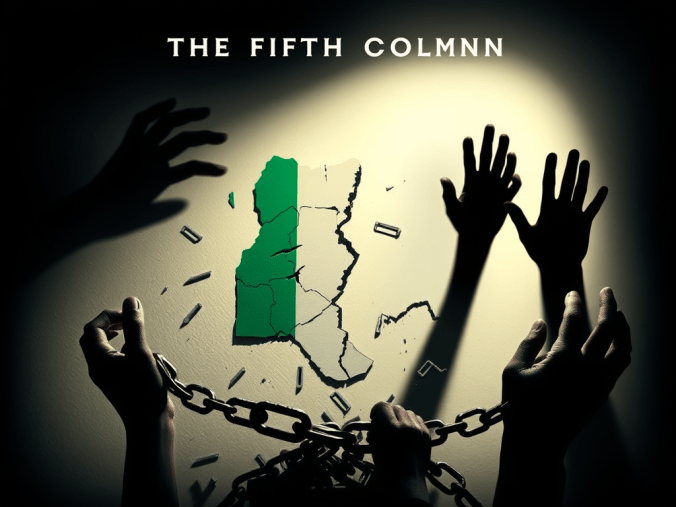
8. THE PSYCHOLOGY OF THE FIFTH COLUMNISTS — WHY PEOPLE BETRAY THEIR OWN NATION
Sabotage — especially the internal kind — is rarely dramatic. It is psychological.
It emerges from a mix of motivations, fears, conditioning, and incentives that quietly shape human behavior long before the final act occurs. To understand the fifth columnist, you must first understand the inner logic that drives them. Their sabotage is not always ideological; sometimes, it is simply a reflection of what we as a society have become.
1. The Psychology of Greed — When Personal Gain Outweighs the Collective
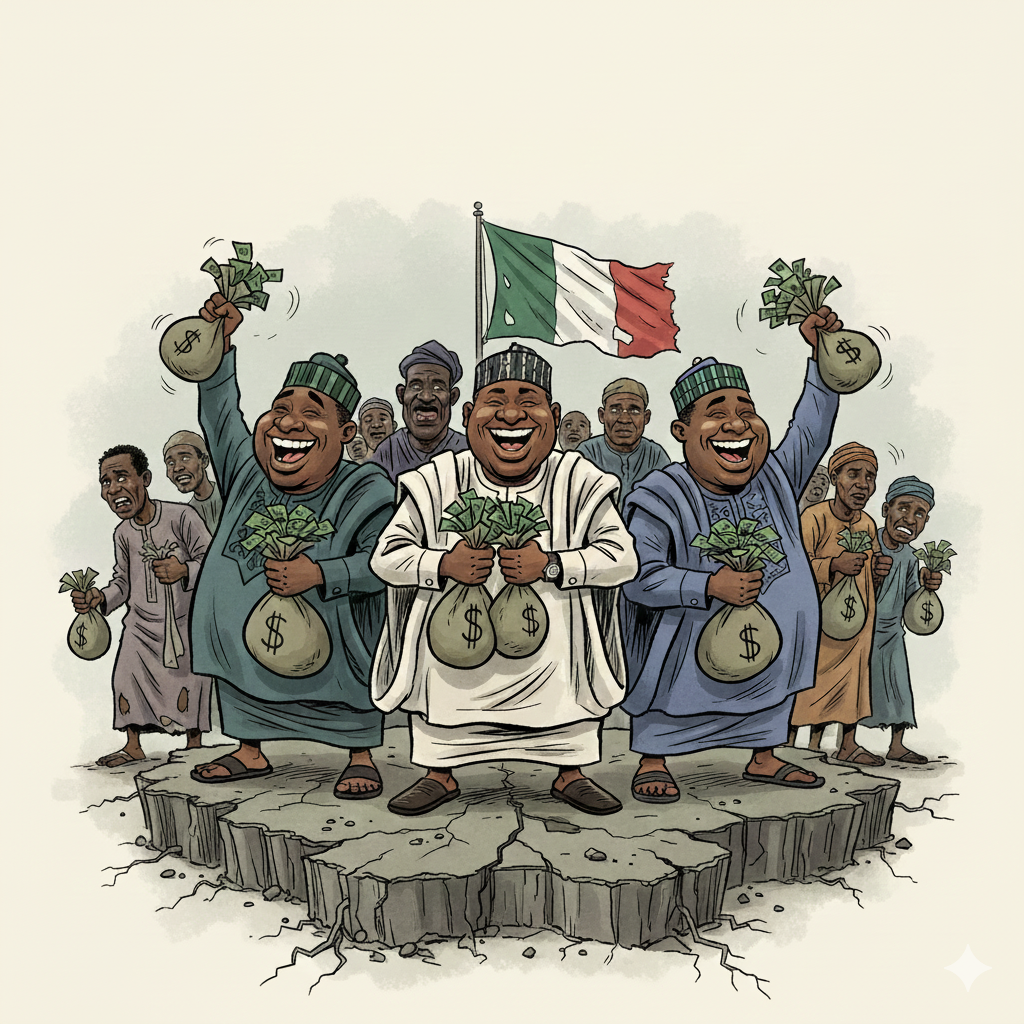
Some individuals genuinely believe that survival is personal, not national. Where institutions are weak, greed begins to look rational. People choose the path that rewards them immediately, even if it harms the country in the long term. To such a person, Nigeria is not a home to build — it is a system to exploit. This mindset explains why a man can falsify documents, manipulate procurement, or undermine reforms without any sense of guilt. In his mind, the country has already failed him; he is merely taking his share.
2. Ethnic and Religious Loyalty — When Identity Becomes Stronger Than Nation
Many betray the nation unintentionally because their primary allegiance lies elsewhere — clan, tribe, faith community, region. Nigeria becomes secondary, almost abstract. This is why some defend wrongdoing when it is “our brother,” why others sabotage national policies because they favour “another group,” and why national cohesion is so fragile. When identity is stronger than citizenship, internal sabotage becomes normalized.
3. Fear — The Quiet Driver of Compromise
Fear is one of the most powerful psychological motivators.
Fear of losing relevance.
Fear of losing access.
Fear of punishment.
Fear of being labeled.
Fear of standing out in a corrupt system.
When people operate in environments where speaking up comes at a cost, silence becomes the safer choice. And silence, too, is a form of sabotage.
The bureaucrat who watches a file disappear does not always act out of greed — sometimes, he is simply afraid to resist those who orchestrated it.
4. Poverty and Survival Anxiety
A hungry man is not thinking about national destiny; he is thinking about the next meal. This desperation makes individuals susceptible to manipulation.
This is how thugs are mobilized.
How vote-buying thrives.
How misinformation spreads.
How citizens sell their conscience cheaply.
Economic instability weakens the psychological immune system of a nation, making sabotage easier to orchestrate.
5. Ideological Fanaticism — Belief Without Balance
Some individuals genuinely believe their ideology is the only path — political, religious, or philosophical. Once this belief hardens, they justify any act that advances “the cause,” even if it damages national stability.
It is how extremists are born.
How political movements become intolerant.
How reform attempts are sabotaged from within because they do not align with a particular worldview.
Fanaticism blinds people to nuance — and a nation without nuance becomes a nation without peace.
6. Disillusionment — “Nigeria Can Never Work”
Perhaps the most dangerous psychological driver is hopelessness. When people believe Nigeria is irredeemable, their actions shift accordingly.
They stop protecting institutions.
They stop defending truth.
They stop caring about the long term.
They become cynical observers of a fire they quietly help fuel.
Disillusionment breeds apathy, apathy breeds irresponsibility, and irresponsibility breeds sabotage.
Many fifth columnists are not cartoon villains — they are people whose faith in the idea of Nigeria has evaporated.
7. Learned Behavior — A System That Teaches Betrayal
Sabotage becomes a culture when:
- people see dishonesty rewarded,
- integrity punished,
- wrongdoing normalized,
- and mediocrity celebrated.
Over time, betrayal becomes a learned skill — not because people are inherently bad, but because the environment teaches them that loyalty is costly and opportunism pays. The system, reproduces itself, creating a new generation of fifth columnists who do not see their actions as betrayal, but as “how things are done.”
Why Understanding This Matters
A nation cannot heal what it does not understand. And the fifth columnist cannot be confronted only through policy or punishment; there must be a societal introspection that tackles the mindset that makes sabotage possible.
Whether the motive is greed, fear, identity, ideology, survival, or disillusionment, the result is the same: the weakening of the very country we all claim to love.
The war against the fifth column is not just institutional; it is psychological.
9. UNWITTING FIFTH COLUMNISTS — WHEN CITIZENS BECOME ENEMIES WITHOUT KNOWING
Not all fifth columnists operate with intention. Some are simply citizens responding to frustration, fear, tribal sentiment, or long-term disillusionment. But the effect is the same: they weaken the nation in ways they do not fully grasp. You see this in the little things that have become normal:
1. The Rumor Mills:
- Forwarding unverifiable broadcasts on WhatsApp or social media
- amplifying fear without verification
- rushing to share sensational headlines before thinking of their impact, etc.
In a society already plagued by mistrust, misinformation becomes its own form of violence.
2. Defending Corruption When It Benefits “Our Own”: We have perfected a dangerous double standard:
- corruption is wrong when it is their person,
- but forgivable when it is our person;
- injustice is unacceptable when we are the victims,
- but tolerable when it punishes our opponents.
This is how societies lose their moral center, gradually, quietly, and without resistance.
3. Voting Based on Tribe, Religion, and Sentiment
Many citizens do not vote for competence; they vote for identity. They reward mediocrity because the candidate “shares our origin.” This is how we elect people who cannot serve the nation, only their constituency of emotion.
4. Supporting Wickedness Because It Hurts the Opponent
Some citizens celebrate policy failures, insecurity spikes, misfortunes, or economic hardship simply because it embarrasses their political rivals. Tragedy becomes content. Human lives become political ammunition. This is not politics. It is self-destruction wrapped in the illusion of strategy.
5. Giving Up on Nigeria
Hopelessness is a quiet saboteur. Giving up on Nigeria does not only manifest as silence. It shows up as derision, constant antagonism, performative pessimism, and the sneering insistence that “nothing good can ever come from this country.” Over time, this posture becomes a subtle form of sabotage. People stop defending what is left, stop demanding better, stop holding themselves accountable. A society cannot rise when its people have emotionally withdrawn from the idea of a shared future.
In these ways, ordinary citizens, without ever planning to, become part of the internal forces weakening the country. Not through hatred, but through habits. Not through conspiracy, but through resignation.
And this is why the fifth column is not only a political or economic matter — it is a societal one.
10. A CLARION CALL FOR A NEW NIGERIA — REBUILDING FROM WITHIN
If Nigeria will rise, the work must begin in the heart, before it manifests in institutions. The rebuilding of a nation starts with the rebuilding of its citizens.
Nation-building is not an abstract idea, It is a daily posture, a way of thinking and a way of living. It requires:
- Integrity, even when shortcuts are easier.
- Empathy, especially in a country where hardship is widespread.
- Civic courage, to speak truth even when it is inconvenient.
- National consciousness, the understanding that we are bound to one another.
- Media literacy, to resist propaganda and misinformation.
- A rejection of sentiment-driven politics, which has cost us decades of progress.
Nigeria will not be healed by good intentions alone. She will be healed by citizens who insist on doing the right thing, consistently and collectively. And yes, the task is enormous. But no nation ever transformed, without the uncomfortable work of introspection and cultural renewal.
11. WAY FORWARD & CONCLUSION — THE BATTLE WE MUST WIN
Nigeria will not fall because of foreign enemies; nations rarely do. Countries collapse when internal forces — political, economic, bureaucratic, social, and psychological, quietly align against their own stability.
And if you, reading this, recognize yourself in any of the categories described above, then it is time for honest reflection. It is time to repent, re-calibrate, and reconsider your posture toward the nation you claim to love. Because the real danger is not out there. It is in here;
In the systems we tolerate.
In the behaviors we normalize.
In the wrongs we excuse.
In the cynicism we have embraced.
In the jokes we forward, the lies we repeat, the shortcuts we justify, the sabotage we overlook because it benefits “our side.”
But the good news is also internal.
The same citizens who unknowingly weaken the nation can consciously rebuild it.
The same voices that once spread confusion can become amplifiers of truth.
The same hands that bent the rules can strengthen them.
The same society that excused sabotage can learn to confront it boldly and consistently.
The fifth columnists, the enemies within, are powerful, yes. But they are not invincible.
Their strength thrives only where clarity is absent, where responsibility is avoided, where citizens outsource their conscience to tribe, religion, anger, or apathy.
The greatest antidote to them is simple but profound: clarity, responsibility, and courage.
Clarity to see through manipulation and misinformation.
Responsibility to hold ourselves to the standards we demand of others.
Courage to confront wrongdoing, whether committed by the powerful or by those closest to us.
May we have the courage to confront the fifth columnists, and the humility to ensure we do not become one… Amen.


 samaderibigbe